Starting and running a hypnosis practice demands self-awareness and strategic decision-making. As a professional hypnotist, your success doesn’t depend solely on how well you guide a client into trance. It also hinges on how well you guide yourself through the many decisions that shape your career.
If you want your practice to be fulfilling and sustainable, you need to understand what you’re building and who you want to serve. The questions you ask yourself now can set the tone for years of growth ahead.
1. What Is the Central Focus of Your Practice?
When starting a hypnosis business, always define your specialty. Trying to be everything to everyone can dilute your effectiveness and make it harder to attract clients who are the right fit for your services.
Ask yourself: What part of hypnosis excites me the most? You may be passionate about helping people stop smoking, or you may thrive in performance-based coaching. Specializing helps you sharpen your messaging and streamline your training.
Your background, training, and unique experiences can help you choose a focus area. When you’re clear about your specialty, it becomes easier to communicate what you do and attract the clients who benefit most from your approach.
2. Who Do You Enjoy Working With?
Operating a hypnosis business isn’t just about what you do. It’s about who you do it for. Understanding the type of clients that energize you can dramatically improve the quality of your day-to-day work and the long-term health of your practice.
Think back to your favorite sessions. What kinds of people were sitting in the chair across from you? Were they high-achieving professionals? Busy parents? Creative entrepreneurs? When you identify the traits and values of clients with whom you believe you had more successful sessions, you can align your services and marketing to attract more of them.
This precision with your preferred clientele can also help you craft offers and messaging that speak directly to your audience. Working with the right people leads to better outcomes for both you and your clients.
3. How Much Should You Work?
Burnout is an overlooked threat to private practice hypnotists. If your calendar is full of back-to-back sessions and admin tasks with no breathing room, you risk losing your passion and creativity.
Setting boundaries for your workload early on can prevent this. Decide how many sessions per week feel sustainable for you. Consider how much time you want to devote to client work, ongoing hypnosis certification training, and business development.
Build your schedule based on energy, not just availability. That might mean front-loading your week with sessions and saving Fridays for training or rest. When you honor your limits, you stay sharp, which gives your clients a better version of you.
4. What Kind of Alliances Will Be Beneficial to You?
You don’t have to grow your practice alone. Strategic partnerships can open doors to new client streams and reinforce your credibility.
Identify professionals who work with similar client populations but offer complementary services. This might include therapists or coaches. Reaching out and building authentic relationships can lead to referral networks that benefit everyone involved.
Once you make these connections, find ways to offer value. Don’t just ask for referrals. You could create a shared resource, co-host an online hypnosis webinar, or refer clients who need something outside your scope. When you nurture these relationships with consistency and trust, they can become one of your most valuable assets.
5. How Will Your Systems Be Configured?
The client journey starts from the moment they discover you and your practice. This means your systems should support them throughout the entire experience, from discovery to delivery and follow-through.
Outline the steps a potential client takes to transition from a curious visitor to a paying customer. Is your website clear about what you do? Can someone easily schedule a consultation or session? Do they understand the benefits of multiple sessions or packages?
Use automation wisely to support your workflow without losing personal touch. Scheduling tools and onboarding materials should feel seamless and client-friendly. They shouldn’t dissuade your clients from engaging in the hypnosis journey.
Once your systems are dialed in, you can spend more time doing what you love.
6. Are You Building a Practice That Supports Your Lifestyle?
The most successful hypnosis practices support the hypnotist as well as the clients. As you refine your business, consider how well it fits into your life.
Do you want to work evenings, weekends, or during traditional hours? Are you building for in-person sessions, virtual sessions, or a hybrid model? Do you want to establish a solo practice or eventually train a team?
Your answers will guide everything from your pricing model to your marketing approach. When your business model matches your ideal lifestyle, you’re more likely to stay motivated, creative, and fulfilled.
Complete a Monthly Check-in
As your practice evolves, make it a habit to check in with yourself. Reflect on questions like:
- What’s working well in my practice right now?
- What’s causing friction, either in my systems or my sessions?
- What’s one small adjustment that would improve my work or client outcomes?
These small, consistent reflections compound over time. They help you notice what needs attention before it becomes a bigger issue and keep your growth aligned with your goals.
Your Practice Reflects Your Questions
Running a hypnosis business comes down to having the right intentions. The more thoughtful and focused questions you ask, the better a hypnotist—and business owner—you’ll be in your daily decisions.
You don’t need all the answers up front. But by regularly checking in with yourself, you build a practice rooted in purpose. That’s how you create something sustainable.
Video

Infographic
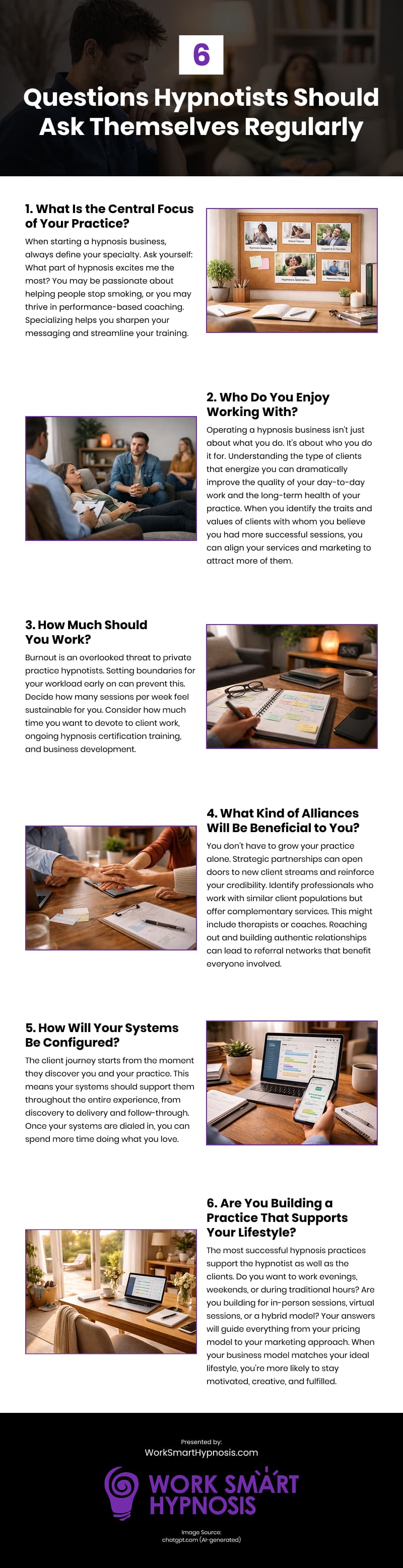
Launching and sustaining a successful hypnosis practice requires self‑awareness and strategic planning to ensure long‑term fulfillment. This infographic outlines key questions hypnotists should regularly ask themselves to stay aligned, intentional, and effective in their professional growth.